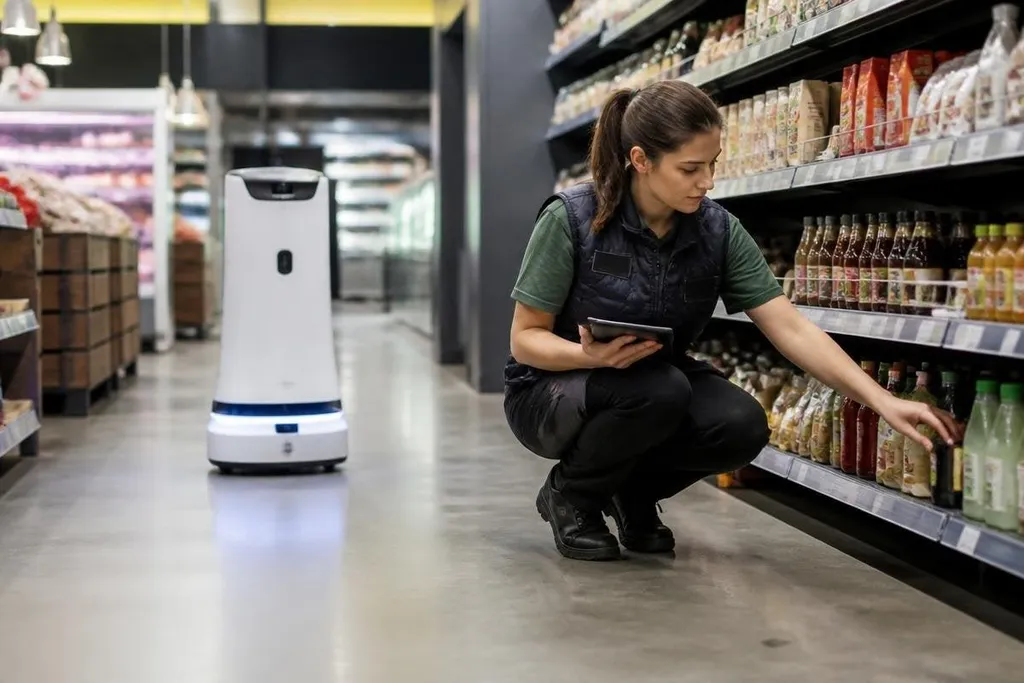
Retail machines can move stock, check shelves, guide shoppers, or collect store data. The business opportunity may sit in the work around that robot, not in the sale of the hardware itself.
If you’re assessing this market, start with the task, the buyer, and the cost of failure. A system built for one narrow store problem can be easier to sell than a machine that promises to change the whole shop.
Quick read
- Retailers can buy robots, rent them, or pay for a completed task.
- Service companies can earn from setup, fleet support, repairs, and staff training.
- The open question is whether each use case saves enough labor or prevents enough loss to pay for the system.
Where the business starts
The first opportunity is task-based automation. A retailer may need help with shelf checks, stock movement, floor cleaning, security patrols, or customer guidance. Each task has a different buyer, work pattern, safety concern, and measure of success.
That creates room for focused companies. One firm might build software for shelf images. Another might run overnight cleaning robots for several stores. A third might connect robot alerts to a retailer’s stock system so staff can act on missing items.
The machine still matters, but it is only one part of the sale. A buyer needs a working process around it, including charging, access, safe routes, staff handoffs, and a way to fix faults.
Retail robotics can support several payment models. The right one depends on who owns the risk and how easy it is to measure the result.
- Hardware sales: The retailer buys the robot and carries the cost of upkeep, software, and replacement parts.
- Robot rental: A service company supplies machines for a monthly fee, which lowers the first payment.
- Task contracts: The customer pays for clean floors, checked shelves, or moved goods rather than owning the robot.
- Software fees: A retailer pays for fleet control, reports, alerts, or links to existing store systems.
- Support work: Technicians earn from installation, repairs, safety checks, and worker training.
Task contracts may suit retailers that lack a robotics team. Robot rental may suit a chain that wants to test one store before making a wider purchase. Software fees make sense when a retailer already owns machines but lacks a way to manage them.
The data opportunity has limits
Robots can collect information about routes, shelf conditions, store traffic, and task time. That information may help a retailer find work that staff repeat each day or areas where stock checks break down.
The value depends on data quality and access. A camera that misses low shelves gives a manager a clean-looking report with weak answers. A robot that cannot connect to the store’s existing systems may leave staff copying results by hand.
Privacy also matters when a robot records people or operates near shoppers. A company selling a retail system needs clear rules for storage, access, deletion, and staff notices. Those rules are part of the product, not paperwork added at the end.
Retail robot claims need a named machine, store setting, task, and result. Retail robotics coverage from Robot24.com can give you those details before you price a pilot or write rules for shopper data.
What can stop the sale
Retail stores are busy, changeable places. Boxes block routes, shoppers stop without warning, and staff move fixtures. A system that works on a clean test floor may need more supervision in a live store.
Support costs can also erase the expected saving. The buyer needs to count charging time, service visits, software fees, training, and the work staff do when the robot stops. A low purchase price can still lead to a costly operation.
I’d start with a service tied to one measured task, because a narrow result is easier to check than a broad promise about automation.
A practical buyer and builder checklist
Before funding a retail robot product, check these points:
- Name the task in one sentence and identify the person who pays for it.
- Set the result the store can measure, such as completed checks or hours of cleaning.
- List what happens when the robot stops, loses its route, or meets a shopper.
- Price the full service, including software, repairs, training, and staff time.
- Test how the system connects to stock, scheduling, and reporting tools.
That checklist also helps a new supplier choose its place in the market. The best opening may be a repair network, a software layer, or a managed service rather than a new robot design.
The next decision is plain: pick one store task, name its full operating cost, and find out who will pay for the result.